Why Blood Pressure Deserves Your Attention
High blood pressure, or hypertension, is one of the most common health problems we see in Hyderabad clinics, and one of the most misunderstood. It rarely causes obvious symptoms, which is exactly why it is often called a silent condition. Many people feel completely fine and are surprised to learn their numbers are high during a routine check-up or before a planned surgery.
Left uncontrolled over the years, raised blood pressure quietly strains the heart, kidneys, eyes and brain, and increases the risk of heart attack and stroke. The encouraging news is that blood pressure is very controllable. With the right habits, regular monitoring and, when needed, medication guided by your doctor, most people can keep it in a safe range and live full, active lives.
This guide is meant as patient education, to help you understand the condition and work confidently with your physician. It is not a substitute for a personal consultation.
Understanding Your Numbers
A blood pressure reading has two numbers, for example 130/80. The top number (systolic) is the pressure when your heart beats, and the bottom number (diastolic) is the pressure when your heart rests between beats. Both numbers matter.
- Normal: generally around 120/80 or below.
- Elevated or borderline: readings creeping above normal that deserve lifestyle attention.
- High blood pressure: consistently raised readings across several occasions, which your doctor will confirm and classify.
- A single high reading does not mean you have hypertension. Diagnosis is based on multiple readings over time, often including measurements taken at home.
Rethink Salt: The Hidden Culprit in Our Kitchens
For many Indian patients, salt is the single biggest lever for lowering blood pressure. The catch is that most of the salt we eat is not the pinch we add at the table, it is hidden inside everyday foods.
In Hyderabad kitchens and canteens, common high-salt culprits include pickles (avakaya, gongura), papads, namkeen and mixture, packaged snacks, instant noodles, ready-made masala mixes, and restaurant biryani and gravies. Even a plate that looks healthy can carry a heavy salt load.
- Cook with less salt and taste before adding more; your palate usually adjusts within a few weeks.
- Cut back on pickles, papads, fried snacks and packaged namkeen, treating them as occasional foods rather than daily ones.
- Read labels for sodium; higher numbers mean more salt.
- Ask about salt when eating out, and go easy on extra gravy and sauces.
- Do not switch to a low-sodium salt substitute on your own. These are high in potassium and are not safe for everyone, especially people with kidney problems. Check with your doctor first.
Eat for a Healthy Heart, the Indian Way
You do not need an imported diet to eat well for your blood pressure. A traditional, balanced Indian plate, adjusted thoughtfully, works beautifully. The principle is simple: more of the fresh and whole, less of the fried, salty and ultra-processed.
- Fill half your plate with vegetables and include fruit daily; potassium-rich foods such as banana, spinach, tomato and beans help balance sodium (though if you have kidney disease, ask your doctor before increasing these).
- Choose whole grains such as jowar, bajra, ragi and brown rice over refined options wherever you can.
- Include dals, curd, buttermilk (lightly salted or unsalted), nuts and seeds for protein and minerals.
- Limit deep-fried items, sugary sweets and sugary drinks; the Hyderabad heat makes it tempting to reach for cold soft drinks, so prefer water, lime water without added salt, or buttermilk.
- Keep alcohol minimal, as it can raise blood pressure, and avoid tobacco in every form.
Move More, Weigh Less, Sleep Better
Physical activity is powerful medicine for blood pressure, and it is free. Aim for regular movement most days of the week, such as brisk walking, cycling, swimming or any activity you enjoy and can keep up. In Hyderabad, walking in a park such as KBR or Sanjeevaiah Park in the cooler early morning or evening helps you avoid the harsh afternoon sun and the worst of the pollution.
Losing even a small amount of excess weight can meaningfully lower blood pressure. Managing your waist size matters as much as the number on the scale.
Sleep and stress are often overlooked. Poor sleep, long working hours and chronic stress can keep blood pressure high. Simple daily habits, such as slow breathing, prayer or meditation, time with family, and a consistent bedtime, genuinely help. If you snore heavily and feel very sleepy during the day, mention it to your doctor, as sleep apnoea can raise blood pressure.
Monitoring at Home and Taking Medicines Wisely
A good home blood pressure monitor is a worthwhile investment. It helps you and your doctor see the real picture beyond the clinic, where readings are sometimes falsely high simply because of nervousness.
If your doctor has prescribed medication, it helps to understand that blood pressure medicines are usually long-term. They work by keeping levels steady, so they are meant to be taken every day as advised, even when you feel perfectly well.
- Sit and rest quietly for about five minutes before measuring, with your back supported, feet flat on the floor, and arm resting at heart level.
- Avoid coffee, tea, smoking or exercise just before measuring.
- Take readings at the same times each day, note them down, and share the log at your visit.
- Never stop, skip or change the dose of your blood pressure medicine on your own; talk to your doctor first if you have side effects or concerns.
- Keep up your lifestyle habits even after starting medicine, as they help the treatment work better.
When to See Dr. Vennela
Please book a consultation if your home readings are frequently high, if you have been told you have borderline or high blood pressure, or if you have diabetes, kidney concerns or a family history of heart disease. Blood pressure and diabetes often travel together, and managing them as a whole gives the best protection.
Seek urgent medical care if you have a very high reading along with chest pain, severe headache, breathlessness, weakness or numbness on one side, difficulty speaking, or sudden changes in vision. These can signal an emergency.
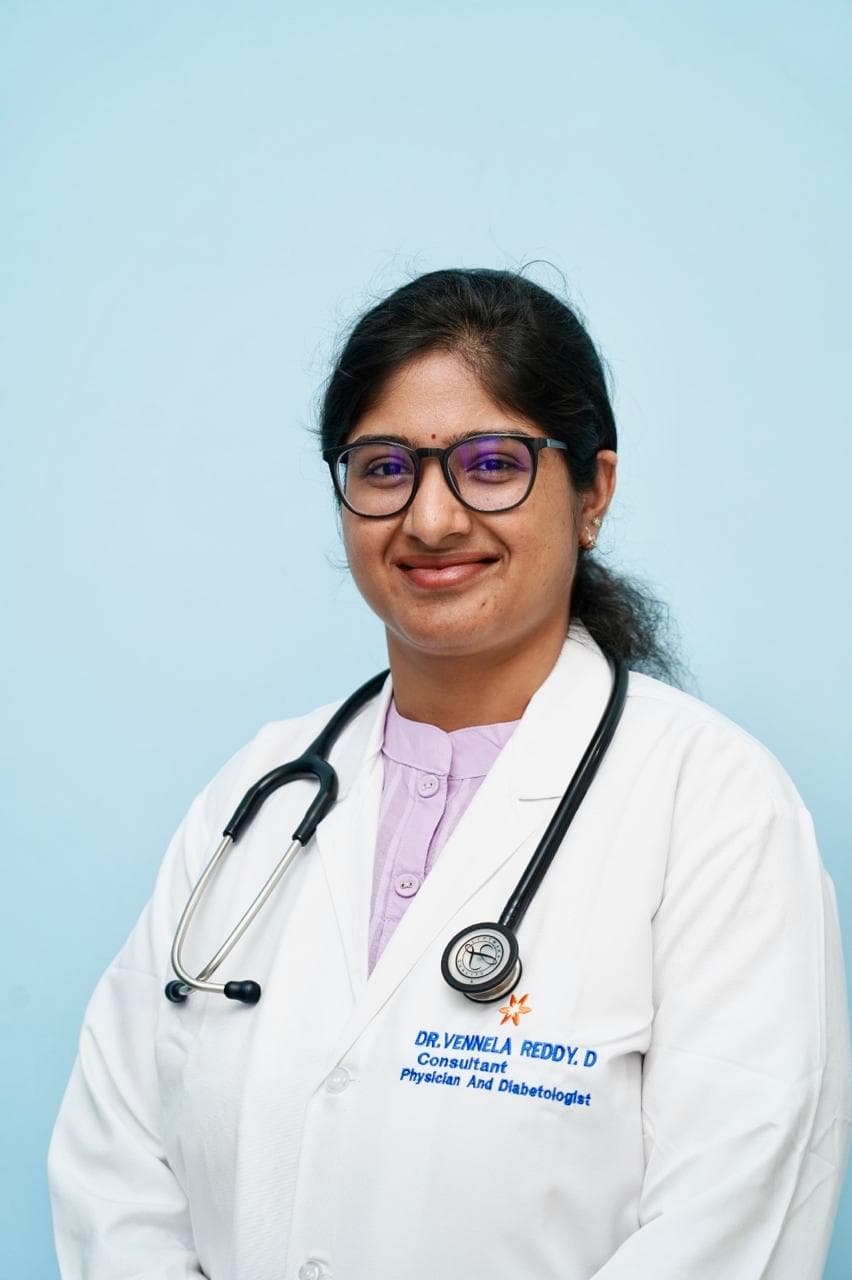
Dr. Vennela Devarapalli, Consultant Physician and Diabetologist in Hyderabad (MD General Medicine, Fellowship in Diabetology, trained at CMC Vellore), can assess your individual risk, confirm the diagnosis correctly and build a plan that fits your life, your diet and your daily routine. Controlling blood pressure is a partnership, and small, consistent steps, reviewed regularly with your doctor, make a lasting difference.